What is Hydroseeding and How Does It Work? A Complete Guide for North Carolina Property Owners
If you've driven past a construction site or new development in Woodleaf or the surrounding areas, you may have noticed crews spraying a dark, slurry-like mixture across bare soil. That's Hydroseeding, a modern lawn establishment technique that has become the go-to method for contractors, municipalities, and property owners who need fast, reliable grass growth. Unlike traditional seeding methods that have been used for generations, Hydroseeding combines seed, mulch, fertilizer, and water into a single application, making it more efficient and effective in most situations. Whether you're dealing with erosion control on a slope, establishing grass around a new home, or reclaiming an overgrazed pasture, understanding how Hydroseeding works can help you make informed decisions about your landscaping project.
What Exactly is Hydroseeding?
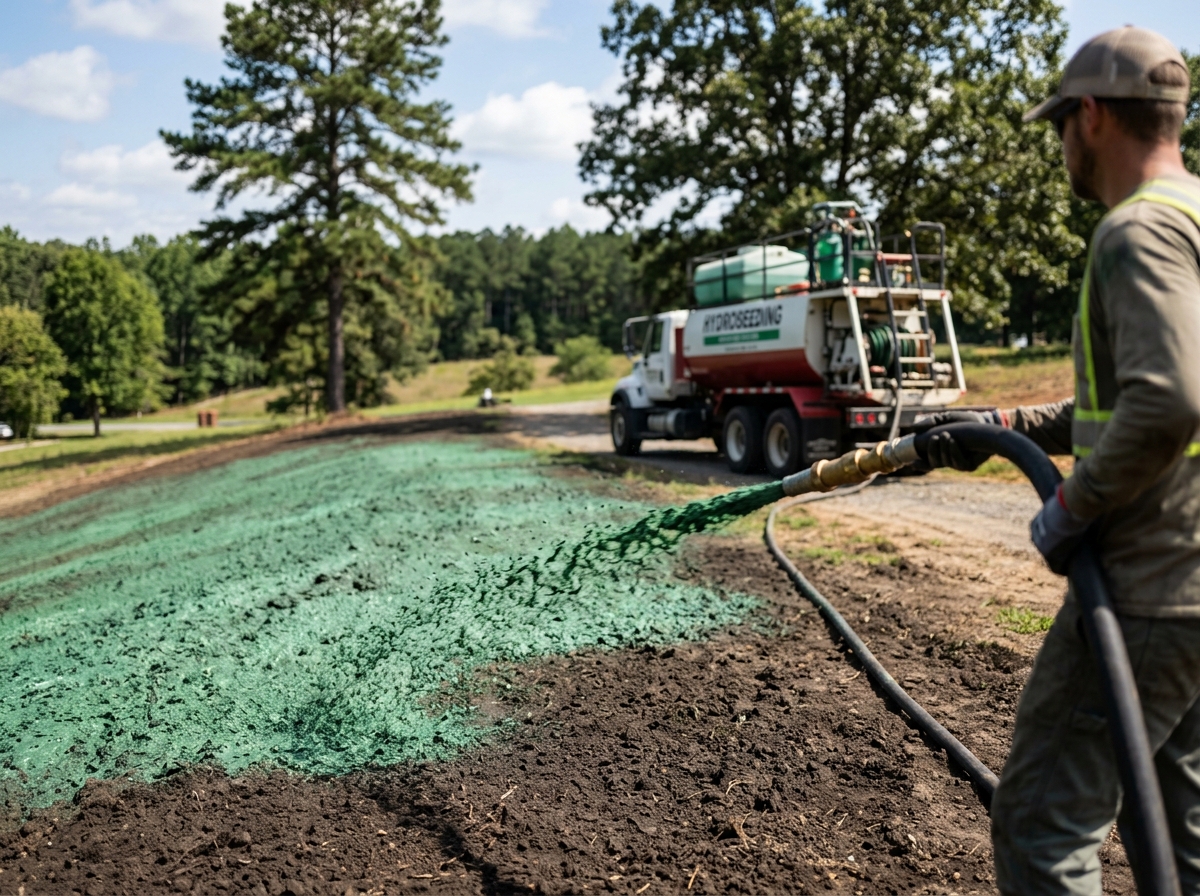
Hydroseeding is a mechanical process that applies seed, mulch, fertilizer, and water simultaneously to prepared soil. The term "hydro" refers to the water-based delivery system, while "seeding" describes the primary goal of establishing grass or other vegetation. The mixture is stored in a large tank mounted on a truck or trailer and is sprayed onto the ground through a hose and nozzle, similar to how a fire truck delivers water. The slurry consistency ensures that seeds make good contact with the soil while the mulch and tackifiers help the seeds stay in place and retain moisture.
This method differs fundamentally from dry seeding, where seeds are distributed separately, or from sod installation, where mature grass is rolled out across prepared ground. Hydroseeding occupies a middle ground, offering faster establishment than dry seeding but at a fraction of the cost of sod.
The Components of a Hydroseeding Slurry
Understanding what goes into the Hydroseeding mixture helps explain why it works so well. A typical Hydroseeding slurry contains several key ingredients, each serving a specific purpose.
The seed itself is selected based on your location, soil type, and intended use. In North Carolina, common choices include fescue blends, bluegrass, and perennial rye. The seed variety matters significantly because different grasses thrive in different conditions. Shade-tolerant varieties perform better under trees, while sun-loving grasses work best in open areas.
The mulch is usually made from recycled wood fiber or paper and serves multiple functions. It helps retain soil moisture, which is critical during the germination phase when seeds need consistent moisture. The mulch also protects seeds from being washed away by rain or irrigation and provides some insulation against temperature fluctuations. The dark color of the slurry comes primarily from this mulch component.
Fertilizer is blended into the mixture to give seeds an immediate nutrient boost. This jumpstarts growth and helps young grass establish quickly. The specific fertilizer formulation is chosen based on soil test results, though a balanced starter fertilizer is standard for most applications.
Tackifiers or tackifying agents are adhesive compounds that help the entire slurry stick to the soil surface. These are especially important on slopes where gravity and water runoff would otherwise wash the mixture downhill. Without tackifiers, Hydroseeding on anything steeper than a gentle grade becomes ineffective.
Finally, water serves as the carrier medium. The mixture must have the right consistency, thick enough to stay where it's sprayed but thin enough to flow through the equipment without clogging.
How the Hydroseeding Process Works Step by Step
The success of Hydroseeding depends on proper preparation and application. The process begins long before the truck arrives on site.
First, the soil must be prepared. Any existing vegetation is removed, and the ground is tilled or graded to create a rough surface. Compacted soil is loosened because seeds need to make contact with soil particles. If your property has significant slopes or erosion concerns, erosion control measures like silt fencing may be installed beforehand.
Once the site is ready, the Hydroseeding equipment is loaded. The tank is filled with water, then the seed, mulch, fertilizer, and tackifier are added in a specific order. Modern equipment has mixing systems that ensure even distribution of all components. The ratio of ingredients varies based on project requirements, but a typical mixture might contain 40 to 60 pounds of seed per 1000 gallons of slurry.
The actual application involves spraying the mixture across the prepared ground. The operator controls the spray pattern and thickness to ensure even coverage. On slopes, the application typically starts at the bottom and works upward, with each pass slightly overlapping the previous one. This prevents bare spots and ensures adequate tackifier coverage to hold everything in place.
After application, the hydroseeded area needs moisture to activate germination. In most cases, the initial moisture in the slurry provides some hydration, but supplemental watering is typically necessary. North Carolina's climate usually provides adequate rainfall, but during dry periods, irrigation may be needed for the first two to four weeks while seeds germinate and establish.
Hydroseeding vs. Traditional Seeding Methods
Comparing Hydroseeding to other lawn establishment methods clarifies why it has become so popular in the contracting industry.
Traditional dry seeding spreads seed across prepared ground, often followed by raking or harrowing to work seeds into the soil. This method is inexpensive but offers no mulch protection and poor seed-to-soil contact in many cases. Seeds can wash away on slopes or be eaten by birds. Germination rates are typically lower, and establishment takes longer.
Sod installation provides immediate results, with mature grass ready to use within days. However, sod is expensive, often two to three times the cost of Hydroseeding. Sod also requires careful handling, rapid installation, and intensive watering during establishment. It's best suited for smaller residential projects or areas where immediate green space is essential.
Hydroseeding occupies the practical middle ground. It costs significantly less than sod, typically 50 to 70 percent less per square foot. It offers much better results than dry seeding, with germination rates often exceeding 90 percent. The mulch protection and tackifier ensure seeds stay in place and remain moist, even on slopes. Grass established through Hydroseeding typically looks good within three to four weeks, though it takes longer to fully mature than sod.
When Hydroseeding Works Best
Hydroseeding excels in specific situations. Slope stabilization and erosion control are primary applications, particularly on construction sites, roadways, and properties with significant grade changes. The tackifier holds the slurry in place on steep slopes where other methods would fail.
New construction sites are ideal candidates because the soil is usually already bare and prepared. Contractors often specify Hydroseeding for lot grading because it's efficient and cost-effective.
Damaged or bare areas in existing lawns can be hydroseeded to blend in with surrounding grass. Large open areas benefit from the speed and coverage rate of Hydroseeding equipment, which can apply material much faster than manual methods.
Limitations and Considerations
Hydroseeding isn't perfect for every situation. In heavily shaded areas, seed selection becomes critical, and some grass types may struggle regardless of application method. Very compacted clay soils may need additional preparation to allow roots to penetrate.
Timing matters as well. Hydroseeding in extreme heat or during drought conditions reduces success rates unless supplemental irrigation is available. Cool-season grasses in North Carolina establish best in fall or spring, while warm-season varieties prefer late spring through early summer.
Pet traffic and heavy foot traffic during the establishment phase can damage newly seeded areas. Most hydroseeded lawns need four to six weeks of minimal disturbance before they're ready for regular use.
Cost Factors and Pricing
The cost of Hydroseeding varies based on several factors. Site preparation expenses depend on existing conditions and the extent of grading needed. The size of the area directly affects total cost, though per-square-foot pricing typically decreases on larger projects. Slope difficulty impacts pricing because steep grades require more careful application and more tackifier. Seed selection and quality influence cost, as premium seed blends cost more than basic varieties. Location and accessibility matter, too, since crews need to reach all areas with equipment.
Hydroseeding represents a significant advancement in lawn establishment technology, combining efficiency, cost-effectiveness, and reliability. By understanding how the process works, what components go into the slurry, and when Hydroseeding is most appropriate, you can make better decisions about your landscaping and erosion control projects. Whether you're a contractor managing a construction site, a property manager dealing with bare slopes, or a homeowner starting fresh after new construction, Hydroseeding offers a practical solution that delivers results. If you're considering this method for your property in Woodleaf or the surrounding areas, consulting with experienced professionals ensures your project receives proper site preparation, appropriate seed selection, and correct application techniques for your specific conditions.