Hydroseeding Services in Rowan County, NC: A Complete Local Guide
If you own property in Rowan County, NC and need to establish a healthy lawn quickly, Hydroseeding offers a modern, efficient alternative to traditional seeding methods. Hydroseeding services in Rowan County, NC have become increasingly popular among homeowners and commercial property managers who want reliable grass establishment without the lengthy wait times of conventional approaches. Rowan County's unique Piedmont geography, clay-heavy soils, and variable spring weather create specific landscaping challenges. Hydroseeding addresses these challenges directly, delivering seed, mulch, fertilizer, and tackifiers in one efficient application. Whether you're managing a new construction site, repairing erosion damage, or establishing a residential lawn, understanding what Hydroseeding offers can help you make an informed decision about your property's landscape.
What Is Hydroseeding and How Does It Work in Rowan County
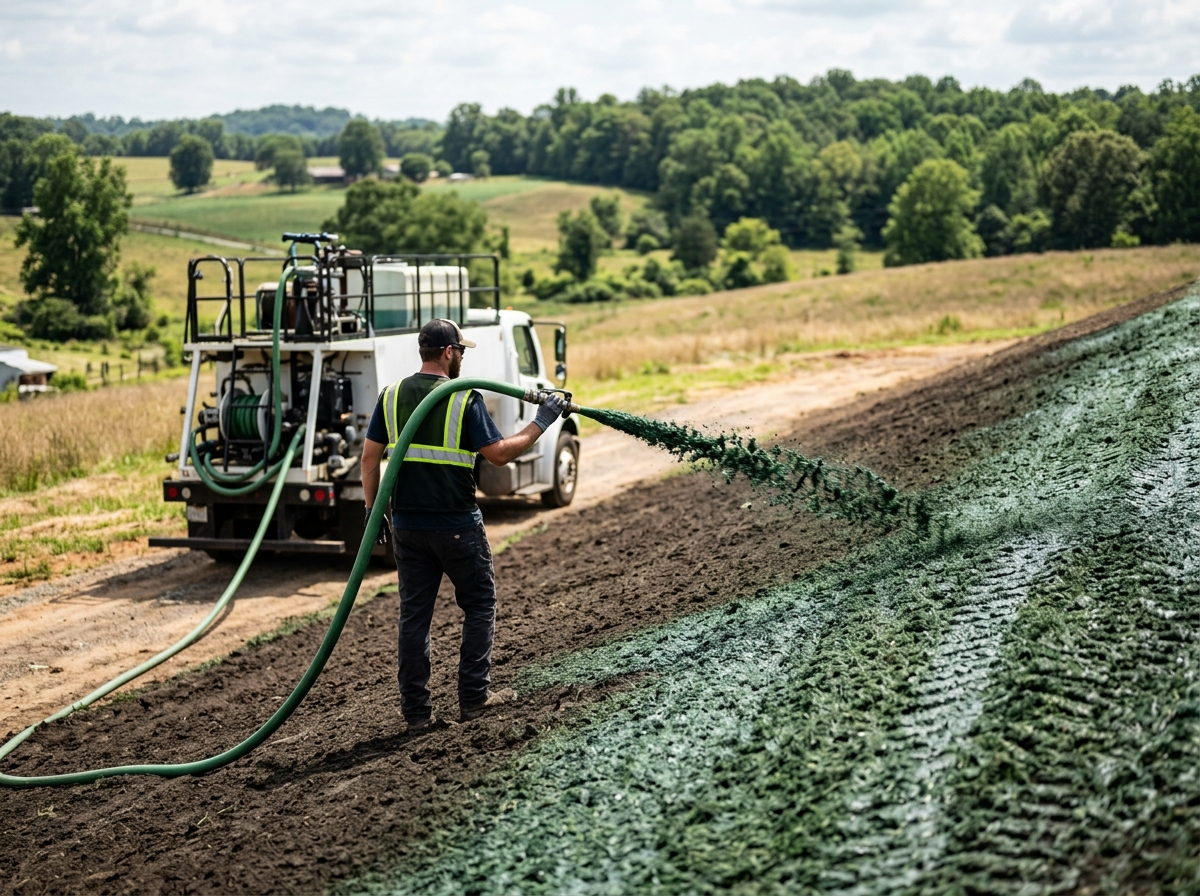
Hydroseeding is a mechanical process that sprays a mixture of seed, water, mulch, and soil amendments onto prepared ground. The process uses specialized equipment to apply this slurry evenly across your property, creating ideal conditions for seed germination and establishment.
The mixture typically includes erosion control mulch that holds moisture, fertilizer tailored to soil conditions, and a tackifier that prevents seed and mulch from washing away during rain. For Rowan County properties, this approach is particularly valuable because our Piedmont clay soils can crust over and prevent seed contact with soil. The Hydroseeding process breaks through these barriers and ensures proper seed placement.
The application takes just hours for most residential properties, and germination can begin within days. You'll see visible growth within two to three weeks, with complete lawn establishment typically occurring within six to eight weeks, depending on weather and grass type selection.
Why Rowan County's Climate and Soil Favor Hydroseeding
Rowan County sits in North Carolina's Piedmont region, which presents distinct landscaping conditions. Our area experiences four distinct seasons with moderate winters and humid summers. Spring rains can be heavy and unpredictable, making erosion control essential during initial grass establishment.
Our soils are predominantly clay-based, which differs significantly from the sandy soils of coastal North Carolina. Clay soils compact easily and drain poorly, creating challenges for traditional seed broadcasting. Hydroseeding overcomes these obstacles by incorporating soil amendments and mulch designed specifically for clay soil conditions. The tackifier holds seed in place even when heavy spring rains arrive, preventing seed loss and erosion.
Summer heat in Rowan County can stress young lawns, but Hydroseeding's mulch layer provides critical moisture retention during dry periods. This reduces the need for constant hand watering and increases overall establishment success rates.
Residential Hydroseeding Applications in Rowan County
Homeowners throughout Rowan County use Hydroseeding for several common situations. New construction homes often require lawn establishment on bare, compacted soil. Rather than waiting months for conventional seeding to produce results, Hydroseeding delivers an established lawn in weeks, allowing families to enjoy their yards sooner.
Erosion repair is another frequent application. Properties with slopes, drainage issues, or water runoff problems benefit from Hydroseeding's erosion control mulch. The tackifier prevents seed loss during the critical establishment period, and the quick vegetation growth stabilizes soil permanently.
Lawn renovation projects also suit Hydroseeding well. If your existing lawn has thin spots, bare patches, or poor coverage, Hydroseeding can fill these areas with healthy, dense grass that matches your established turf.
Pet owners and families with young children appreciate Hydroseeding because it establishes safe, pesticide-free grass growth. The process uses no harsh chemicals, just seed, mulch, and natural amendments.
Commercial and Erosion Control Projects in Rowan County
Businesses, property managers, and developers throughout Rowan County rely on Hydroseeding for larger applications. Commercial properties need quick lawn establishment that looks professional and maintains the property's appearance. Hydroseeding accomplishes this efficiently, with results visible within weeks rather than months.
Erosion control is critical on construction sites, steep slopes, and areas near waterways. Rowan County's regulatory environment increasingly requires erosion control measures on development projects. Hydroseeding provides both immediate erosion prevention and long-term soil stabilization through established vegetation.
Highway and road projects use Hydroseeding extensively to restore areas disturbed by construction or maintenance. Properties adjacent to NC roads, parking areas, and commercial driveways benefit from the process's efficiency and effectiveness.
Selecting the Right Grass Species for Rowan County Conditions
Hydroseeding success depends partly on choosing appropriate grass species for our local climate. Rowan County's Piedmont location calls for cool-season grasses that tolerate our temperature fluctuations and seasonal variations.
Tall fescue is an excellent choice for Rowan County Hydroseeding projects. This hardy grass handles our clay soils well, resists disease, and tolerates both dry periods and heavy moisture. Kentucky bluegrass offers similar benefits and naturally spreads through rhizomes, creating thick, resilient turf.
Perennial ryegrass germinates quickly and provides rapid visual results, making it popular for projects where quick coverage matters. Blended seed mixtures combining these species often perform better than single-species applications, providing resilience against variable weather and soil conditions.
Timeline and Maintenance After Hydroseeding in Rowan County
After Hydroseeding application, your new lawn enters a critical establishment phase. During the first two weeks, keep the hydroseeded area consistently moist but not waterlogged. If Rowan County's spring rains don't provide adequate moisture, light watering may be necessary.
By week three, you'll notice green shoots emerging through the mulch. This is normal and indicates successful germination. Avoid heavy foot traffic during this period to prevent soil compaction and seed displacement.
After six to eight weeks, your lawn should be established enough for normal use. You can begin regular mowing once grass reaches three to four inches in height. First mowing should use sharp blades and should not remove more than one-third of the blade height.
Ongoing maintenance follows standard lawn care practices: regular mowing, seasonal fertilization, and watering during dry periods. Established hydroseeded lawns typically outperform traditionally seeded lawns in density and vigor.
Hydroseeding services in Rowan County, NC offer homeowners and businesses a practical, efficient solution for lawn establishment and erosion control. Our Piedmont clay soils, variable spring weather, and summer heat create conditions where Hydroseeding excels compared to traditional methods. Whether you're addressing erosion, establishing a new lawn, or renovating thin turf, Hydroseeding delivers faster results with greater reliability. If you're considering Hydroseeding for your Rowan County property, consulting with experienced professionals ensures proper species selection, equipment application, and maintenance guidance. The process is straightforward, results are visible quickly, and the long-term benefits include healthier, denser turf that handles our local climate effectively.