Do You Need to Prepare Soil Before Hydroseeding? A Complete Guide for North Carolina Homeowners
The short answer is yes, soil preparation before Hydroseeding is essential. However, the degree and type of preparation depends on your specific site conditions, existing soil quality, and project goals. Many homeowners assume they can simply spray hydroseed directly onto bare ground and watch grass grow. In reality, proper soil preparation can mean the difference between a lush, thriving lawn and patchy, struggling grass that fails to establish. At Hydroseed N.C., we've worked on hundreds of properties throughout Woodleaf and the surrounding North Carolina region. We've seen firsthand how sites that receive proper soil preparation produce superior results compared to those that don't. This guide walks you through everything you need to know about preparing your soil for Hydroseeding success.
Why Soil Preparation Matters for Hydroseeding Projects
Hydroseeding is a mechanical process that sprays a slurry containing seed, mulch, tackifier, and nutrients onto prepared ground. While the equipment is sophisticated, the process relies entirely on what's underneath. Think of it like painting a wall, if the wall is dirty, cracked, or uneven, the paint won't adhere properly or look good regardless of how expensive the paint is.
Soil preparation serves several critical functions. First, it creates a receptive seedbed where seed-to-soil contact is maximized. Seeds need moisture and nutrients to germinate, and they need firm soil contact to absorb water. Second, preparation removes obstacles like rocks, debris, and compacted layers that prevent root penetration. Third, it levels the ground so water flows properly without creating erosion channels or pooling in low spots.
Assessing Your Current Soil Condition
Before any preparation work begins, you need to understand what you're working with. Not all soil is created equal, and North Carolina's diverse geology means soil conditions vary significantly even within Woodleaf and neighboring areas.
Start by examining your soil texture. Clay-heavy soils, common in many parts of North Carolina, tend to compact and drain poorly. Sandy soils drain too quickly and don't retain nutrients. Ideal Hydroseeding soil has a balanced composition with good organic matter. If your soil is predominantly clay or sand, you may need to amend it rather than simply rake and level it.
Next, check soil compaction. If you can't push a screwdriver into the ground easily, your soil is compacted. Construction equipment, heavy foot traffic, or years of neglect can create hard, impenetrable layers. Compacted soil prevents root development and water infiltration, making it impossible for newly hydroseeded grass to thrive.
Look for existing vegetation, rocks, and debris. While minor weeds can be addressed, heavy weed coverage or invasive species may require removal before Hydroseeding begins. Large rocks and debris should always be cleared, as they create bare spots around themselves and interfere with mulch coverage.
Essential Soil Preparation Steps
Most Hydroseeding projects require several preparation steps, though the exact sequence depends on site conditions.
Debris Removal and Grading is typically the first step. This involves removing rocks, sticks, old roots, and any construction waste. In Woodleaf, we often encounter sites with leftover building materials or years of accumulated debris. Proper grading creates the final slope and drainage pattern. Grading should promote water runoff to prevent pooling while avoiding erosion channels.
Soil Testing is highly recommended, especially for larger properties or those with poor drainage history. A soil test reveals pH levels, nutrient content, and soil composition. Most grasses prefer slightly acidic soil with a pH between 6.0 and 7.0. If your soil is too acidic or alkaline, lime or sulfur can adjust it. Nutrient deficiencies can be corrected with targeted amendments. Many North Carolina homeowners skip this step and regret it later.
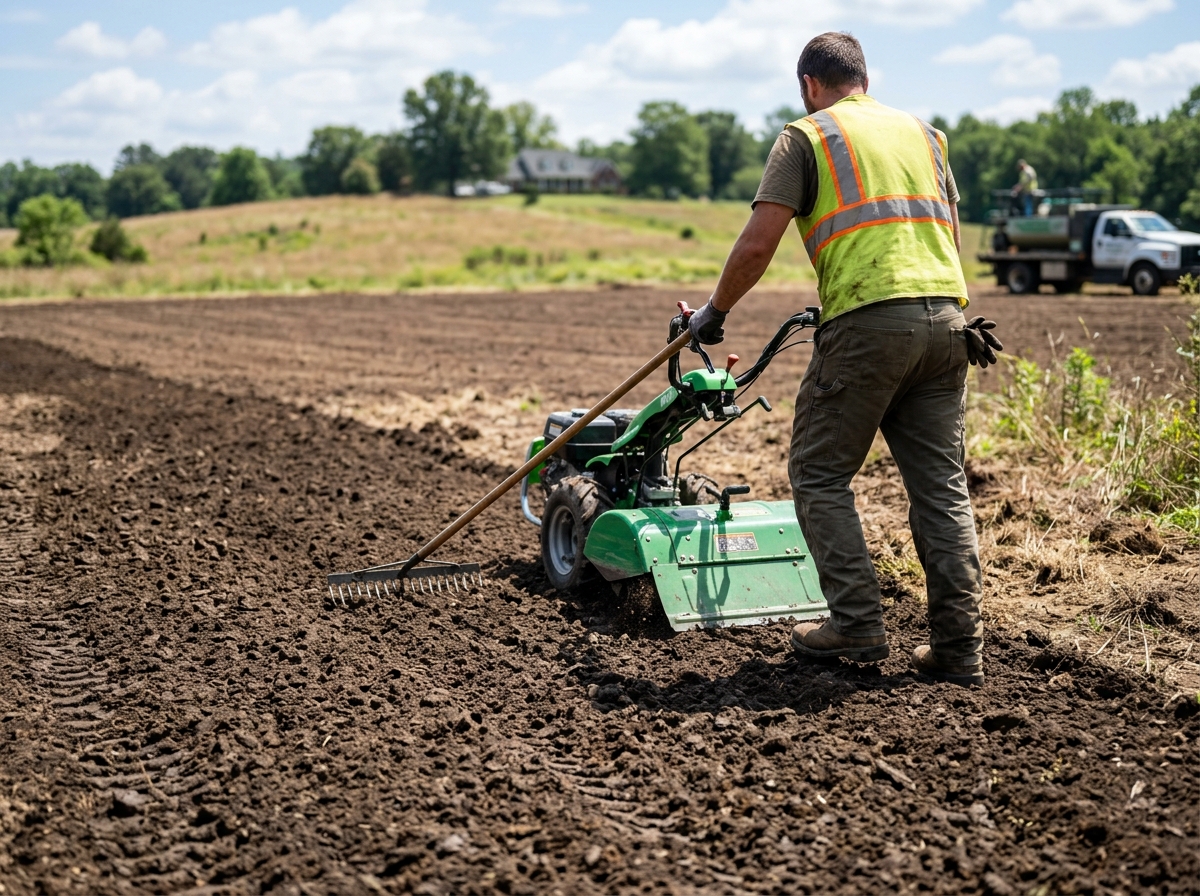
Aeration and Decompaction breaks up hard, compacted soil. For smaller areas, this might involve deep tilling. For larger projects, heavy equipment like aerators or vertical mulchers are more effective. This step is particularly important on construction sites or lawns that have experienced heavy foot traffic. Compacted soil in the Woodleaf area, especially clay-based soils, absolutely requires decompaction for Hydroseeding success.
Soil Amendment adds organic matter and improves soil structure. Compost, aged bark, or specialized amendments can improve water retention in sandy soils or drainage in clay soils. This step isn't always necessary, but it significantly improves results. Quality amendments create a more hospitable environment for seed germination and root establishment.
Final Grading and Raking creates a smooth surface ready for Hydroseeding. The ground should be firm but not compacted, level or properly sloped, and free of large clods or debris. This final preparation ensures even hydroseed application and proper seed-to-soil contact across the entire project area.
Hydroseeding on Slopes and Challenging Terrain
Slopes require special consideration. Erosion is a major concern, particularly in North Carolina where heavy rains are common. Soil preparation on slopes should include adding tackifier to the soil itself, not just relying on hydroseed application. Creating small terraces or using erosion control measures helps prevent washout during the critical establishment period.
For steep slopes in the Woodleaf area, we sometimes recommend slope protection measures like erosion control blankets in addition to proper soil preparation. The blanket holds soil and seed in place while grass establishes.
When Soil Preparation Might Be Limited
Some situations have constraints on soil preparation. If you're Hydroseeding around existing trees or established plantings, you need to be careful not to damage roots or alter drainage patterns. In these cases, preparation is more targeted and conservative.
Similarly, sites with poor drainage due to underlying bedrock or high water tables may not benefit from traditional soil preparation. In these cases, alternative solutions like installing drainage systems before Hydroseeding or choosing appropriate seed mixes for wet conditions become necessary.
Common Mistakes in Soil Preparation
We've seen several preparation mistakes that compromise Hydroseeding results. Over-tilling creates excessive dust and poor soil structure. Under-preparation leaves compacted areas where grass won't grow. Applying hydroseed immediately after heavy rain, when soil is waterlogged, often fails. Conversely, applying to bone-dry soil means the hydroseed slurry won't make proper contact.
Many property owners also underestimate how much debris needs removal. We've seen projects where rocks were left in place, creating bare spots and uneven coverage.
Timeline and Cost Considerations
Soil preparation adds time and cost to your Hydroseeding project. However, this investment typically costs 15-30% of the total project and returns results many times over in the form of better germination rates and healthier established grass. Skipping preparation to save money almost always costs more in the long run through failed Hydroseeding attempts or poor results requiring reHydroseeding.
Soil preparation before Hydroseeding isn't optional, it's foundational. The quality of your final result depends almost entirely on the condition of your seedbed. Whether you're starting from bare ground after construction, revitalizing a neglected lawn, or establishing grass on a challenging slope in Woodleaf or surrounding North Carolina areas, proper soil preparation is non-negotiable. At Hydroseed N.C., we assess every site individually and develop a preparation plan tailored to local soil conditions and your specific goals. When you're ready to discuss your Hydroseeding project, contact us for a consultation. Proper preparation means faster germination, healthier grass, and a lawn that lasts.